For years, we have been told that the next generation of mobile networks will be faster. Faster downloads. Faster streaming. Faster everything.
But what if speed is no longer the most interesting part?
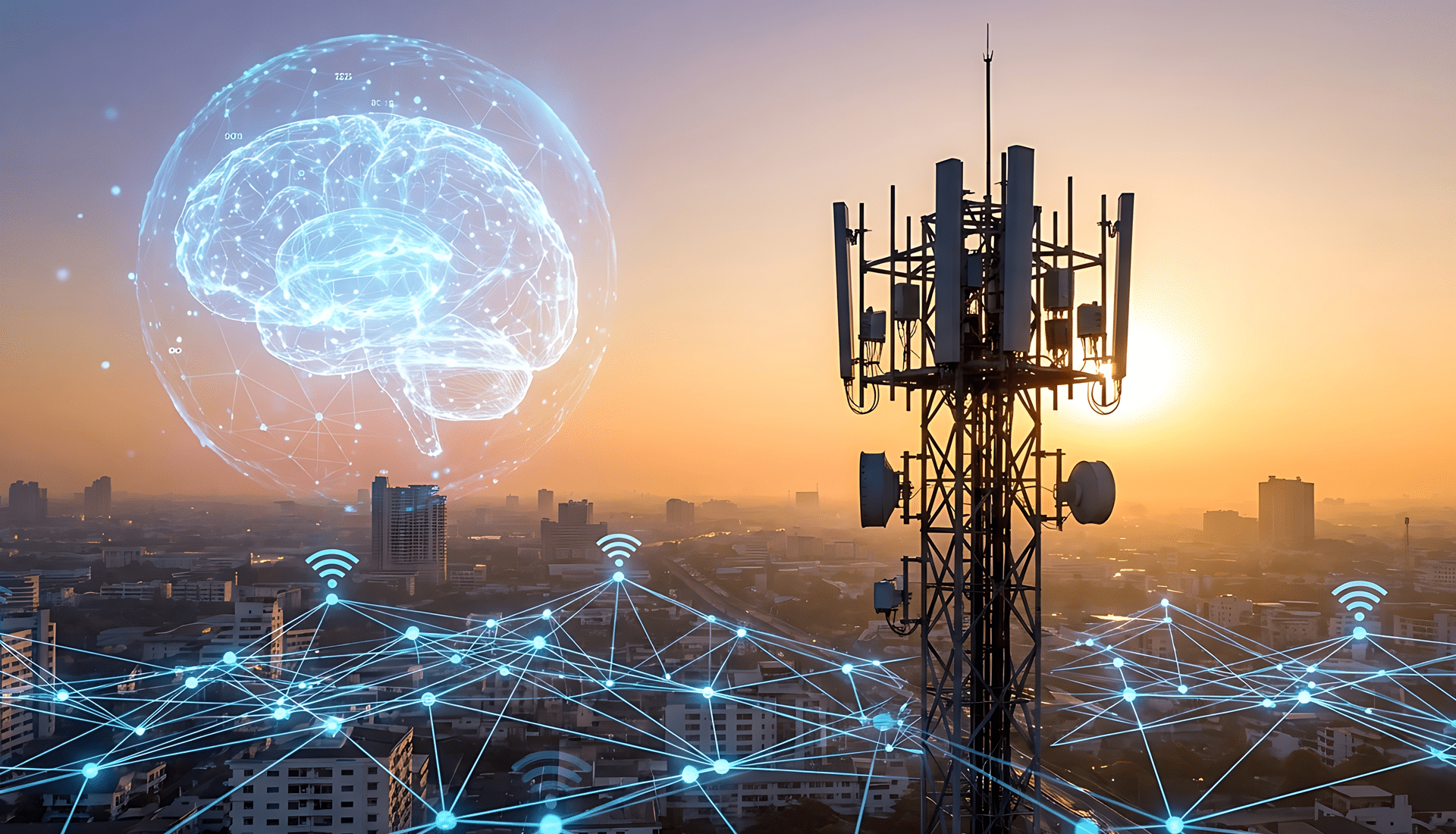
AI-powered 5G networks are beginning to change the role of the network itself. Instead of simply carrying data from one place to another, intelligence is being built deeper into the infrastructure, allowing networks to analyse what is happening and respond in real time.
In other words, the network is getting a brain.
Samsung describes its AI-RAN technology as being able to analyse traffic flows, signal interference and user patterns in real time, continuously adjusting performance and efficiency.
That might sound like something happening far behind the scenes. And it is. But that is precisely what makes it interesting.
Imagine thousands of people leaving a stadium at once, phones appearing everywhere and demand suddenly surging. Or a busy business district reaching peak traffic during the working day. Instead of relying purely on fixed network rules, AI can help the network recognise changing conditions and decide where resources are needed.
The idea is not simply to build a faster road. It is to build a road that understands the traffic.
NTT DOCOMO and SK Telecom have also been exploring the evolution towards AI-RAN, where mobile infrastructure could ultimately combine communications and AI computing capabilities.
That takes AI-powered 5G networks into much more interesting territory.
The first chapter of 5G was dominated by numbers. Gigabits, latency, coverage and endless speed tests.
The next chapter could be far less visible.
You may never know that AI has shifted network resources, reacted to interference or adjusted performance around you. You may simply notice that the connection works when and where you need it.
And perhaps that is the real sign of a smarter network.
Not one that constantly tells us how clever it is, but one that quietly makes better decisions in the background.
So, are AI-powered 5G networks really thinking for themselves?
Not quite. There is no conscious network sitting somewhere contemplating your next video call. But networks are becoming capable of analysing more, adapting faster and making increasingly sophisticated decisions without someone manually directing every move.
For something we once thought of as little more than invisible infrastructure, that is a fairly remarkable change.
5G isn’t just getting faster.
It is getting smarter.